
Indian Oil Corporation (IOC), the country's largest oil refiner and marketing company, is looking to cut operating costs in order to offset the daily loss of Rs 150 crore (Rs 1.5 billion) due to selling petroleum products at subsidised rates.

From the 30 Sensex firms, Bajaj Finance, Reliance Industries, Tata Steel, JSW Steel, Tech Mahindra, Tata Motors, Kotak Mahindra Bank and Maruti were the biggest laggards. Reliance Industries Ltd, India's most valuable company, on Monday reported a 5 per cent fall in the July-September quarter net profit as weak oil refining and petrochemical business hurt operational performance. ICICI Bank, Bharti Airtel, Asian Paints, Adani Ports, UltraTech Cement and HCL Technologies were among the gainers.

French energy giant TotalEnergies SE on Monday said it will make no new financial contribution as part of its investments in Adani group companies till the Indian firm's founder is cleared of bribery charges. The energy giant said it was not aware of the investigation into the alleged corruption. TotalEnergies is one of the biggest foreign investors in billionaire Gautam Adani's business empire and had previously taken stakes in the group's renewable energy venture Adani Green Energy Ltd (AEGL) and city gas unit Adani Total Gas Ltd (ATGL).

In the Sensex pack, ICICI Bank emerged as the top gainer by rising 0.97 per cent, while Tata Steel advanced 0.92 per cent.

The last year has seen public sector undertakings (PSUs) outperforming the Nifty50, albeit by a small degree. But PSU valuations are still, on average, less than half of private sector peers at price-to-equity or PE 8.7x for the Nifty PSU Index versus 20.9x for the Nifty50. There are several reasons for lower valuation.

The FMCG industry hopes for a revival in consumption growth in 2025 with some 'green shoots' already visible, after having a challenging year amid escalating input costs and a double-digit rise in food inflation, which ultimately slowed down the pace of the urban market growth in the second half of 2024. Soaring prices of commodities such as palm oil, coffee, cocoa and wheat forced FMCG players to go for a hike of 3 to 5 per cent or resort to shrinkflation by reducing pack sizes and grammage to retain attractive price points, fearing a volume loss.
Move is aimed at providing better service to the customers.
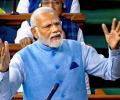
The prime minister was seen wearing a light blue "sadri" jacket as he sat in the Rajya Sabha in the morning.

Decathlon is expecting to double its business in the country in the next three to five years, Decathlon India CEO Sankar Chatterjee said, according to local media reports.

The government allocated Rs 650 billion for petroleum subsidies in FY14, of which Rs 450 billion was used to pay oil marketing companies for the subsidy gap incurred in the previous financial year.

Reliance Industries Ltd on Monday reported a 5 per cent fall in the net profit for the July-September quarter, as weak oil refining and petrochemical business hurt operational performance.

Notwithstanding the robust turnaround in the financial performance for the June quarter (Q1FY24), stocks of state-run oil marketing companies have been in a downtrend in the last month. The fall comes on a rise in crude oil prices that have surged to a 7-month high of $88 a barrel. A busy political calendar in the months ahead that may see the government keep a lid on auto fuel prices is also a dampener, analysts said. Shares of Hindustan Petroleum (HPCL), Bharat Petroleum (BPCL) and Indian Oil (IOC) have shed 9-11 per cent since their respective earnings announcement between July 26 to August 4.
Diesel price on Friday was hiked by 20 paise per litre - the first increase in rates in over two months - as international oil prices neared their highest since 2018. Price of diesel was hiked to Rs 88.82 per litre in Delhi and to Rs 96.41 in Mumbai, according to a price notification of state-owned fuel retailers. Petrol price was not changed. It costs Rs 101.19 a litre in Delhi and Rs 107.26 in Mumbai.
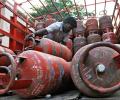
Cooking gas LPG price on Wednesday was hiked by Rs 15 per cylinder in line with a surge in international fuel prices. Rates of both subsidised and non-subsidised LPG prices were hiked, oil company officials said. Cooking gas now costs Rs 899.50 per cylinder in Delhi.

Tyre stocks have been on a tear over the past six months, with average returns exceeding 45 per cent. Except for Apollo Tyres, which has seen a slight correction in the last month and a half, limiting its gains to 16 per cent, listed peers such as MRF, CEAT Tyres (formerly Cavi Elettrici e Affini Torino), and JK Tyre & Industries have delivered returns exceeding 30 per cent during this period. Production-related constraints and sluggish demand in Europe, where sales are expected to remain flat, coupled with high valuations, have contributed to Apollo Tyres' underperformance. The tyre sector's gains can be attributed to robust growth trends driven by the replacement market, which constitutes more than two-thirds of sales.
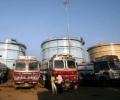
The tankers carrying fuel from terminals to dealer outlets would not just have global positioning system (GPS) tracking but also an electronic key (e-key).

Global supermajor BP Plc's exclusivity with Reliance Industries Ltd has ended but the energy giant will continue to pursue oil and gas as well as mobility ventures in India with the Mukesh Ambani firm owing to an unwritten strategic partnership, BP's outgoing India head Sashi Mukundan said. BP in 2011 spent $7.2 billion to acquire 30 per cent interest in 23 oil and gas blocks of Reliance. Eastern offshore KG-D6 block was the cornerstone of the deal that also provided for a 10-year exclusivity period which meant that BP would take up energy projects or investments in India only in partnership with Reliance.

IOC protests, says have invested in these facilities over a period of time.

India has rejected a request from BP Plc to be allowed to sell jet fuel to the booming aviation market.

Oil marketing companies IOC, BPCL and HPCL have invited expressions of interest from start-ups that wish to be enrolled as fuel entrepreneurs for doorstep delivery of high-speed diesel through mobile petrol pumps.

The US Federal Reserve's interest rate decision, quarterly earnings of corporates and domestic macroeconomic data will influence trading in the equity market in a holiday-shortened week ahead, analysts said. Foreign funds' trading activity, monthly automobile sales data and global trends would also guide market movement this week, they added. Markets would remain closed on Monday on account of 'Maharashtra Day'.

Rising crude oil prices and muted passenger traffic in the July-September quarter (second quarter, or Q2) of 2023-24 (FY24) have raised concerns about the profitability of listed aviation players. These two concerns have caused the stock of InterGlobe Aviation (IndiGo), the largest player in the sector, to slip by 11 per cent since its highs at the end of July. Nuvama Research expects yields to cool down in the near term due to seasonality, rising crude oil prices, and higher capacity.

India Inc has reported a muted start to the financial year 2024-25, with a decline in net earnings and a modest single-digit uptick in revenues. An analysis of 488 companies that have released their results for the June 2024 quarter reveals a 1.6 per cent year-on-year (Y-o-Y) drop in combined net profit -- the weakest performance in the past seven quarters. In stark contrast, the combined net profit of these companies experienced a 13.6 per cent Y-o-Y increase in the previous quarter (Q4FY24) and a 65.2 per cent Y-o-Y rise in Q1FY24.

Foreign portfolio investors (FPIs) have net sold domestic shares worth over $10 billion so far this month amid a shift to China, which not only offers attractive valuations compared to India but has also announced several measures to support the economy and the stock market in recent weeks. If the trend doesn't reverse, this will be the first time that overseas funds will yank out more than $10 billion from Indian equity markets in a month.

Global trends, trading activity of foreign investors and domestic macroeconomic data announcements would dictate terms in the equity market in a holiday-shortened week ahead, analysts said. Equity markets would remain closed on Wednesday for Gandhi Jayanti. "Looking ahead, it will be interesting to monitor Foreign Institutional Investors (FIIs) and their flow into India.
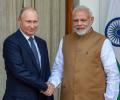
By driving a hard bargain with Russia in procuring crude oil at the lowest price possible, India is furthering the policy of G7 and Washington is "comfortable" with New Delhi over its approach in addressing issues relating to energy security, a top Biden administration official said.
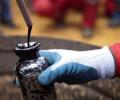
Declining crude price translates into lower under-recoveries for OMCs

If a 5% to 10% fall in the equity market gives you sleepless nights, you are not cut out for a 75% to 80% allocation to equities and must reduce it.

'Investors looking at the next 6-12 months can be certain that the Fed will maintain its easing cycle, and we expect the overall environment to be conducive for fixed income investments for portfolio diversification.'

Just because India has outperformed the US markets in a short recent period, it does not mean that this is based on fundamental reasons that are here to stay, points out Debashis Basu.

Tata Motors was the biggest loser in the Sensex pack, skidding 1.77 per cent, followed by SBI, Power Grid, Tata Steel, Infosys, UltraTech Cement, Titan, Larsen & Toubro, Reliance Industries and Maruti. On the other hand, IndusInd Bank, Bharti Airtel, Asian Paints, NTPC, HCL Technologies, HDFC and Sun Pharma were the gainers.
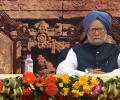
'He will be remembered more for what he did as finance minister -- as someone who functioned well when the political fallout was taken care of.'

'Invest only in stocks of those companies that deliver on earnings and there is earnings visibility too for the next few quarters.'

Trinamool Congress is the second highest recipient of political donations through electoral bonds.
Changes in global oil and gas rates matter more to India's economy than other major economies because the country imports around 87 per cent of its oil, half of its gas in the form of LNG, and over 60 per cent of its LPG.
The state-run oil company's Research and Development Centre singed an agreement with the National Centre for Catalysis Research of IIT Madras for the joint program on Monday.
The public sector oil refining and marketing companies Indian Oil Corporation, Hindustan Petroleum Corporation and Bharat Petroleum Corporation are back on the radar of investors as their profit levels reach record highs.
The windfall taxes on domestic crude oil production and fuel exports will generate close to $12 billion (Rs 94,800 crore) for the government in the remainder of the current fiscal while trimming profits of firms such as Reliance Industries Ltd and ONGC, Moody's Investors Service said Tuesday. On July 1, the government imposed windfall gain taxes on the export of petrol, diesel and aviation turbine fuel (ATF), and on the domestic production of crude oil. It has also mandated exporters to meet the requirements of the domestic market first.
Siemens delivered a strong margin performance and also reported high other income to beat consensus in the January-March quarter (Q2) of FY24 (the company's year-end is September 30). In addition, it has opted to demerge the energy vertical with a 1:1 award of shares in the newly demerged entity which will be listed by the end of this year (CY25).
